
Table of Contents
Introduction
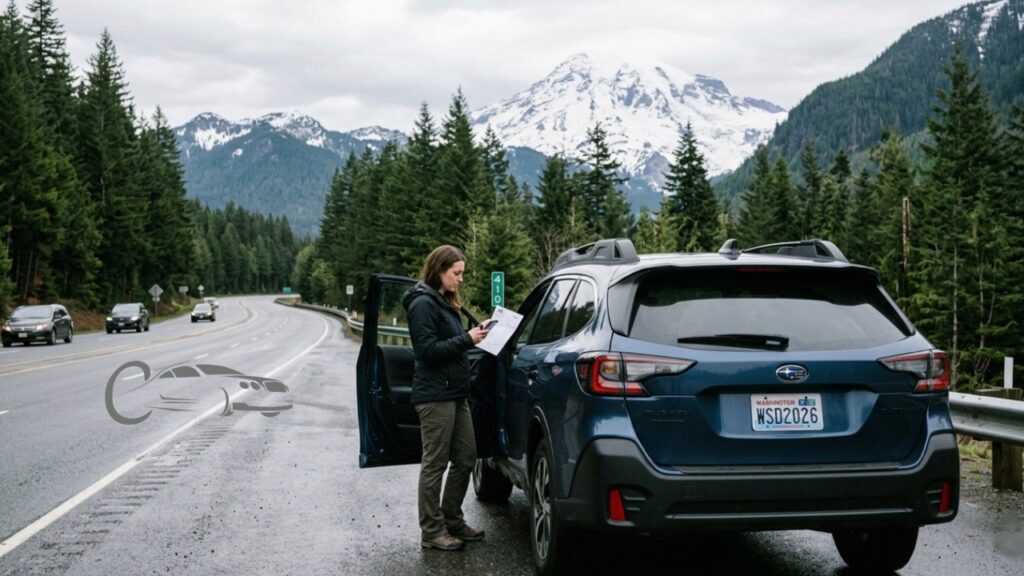
Navigating Washington State’s car insurance landscape can feel a lot like driving through the Cascades in November — dense fog, slippery roads, and the constant feeling that something unexpected is just around the bend. Whether you’re a lifelong resident of Seattle fighting traffic on I-5 every morning, a new transplant settling into Bellevue’s suburbs, or someone rolling into Spokane from across the state line, one thing applies to every single one of you: you cannot legally drive in Washington without meeting the state’s minimum car insurance requirements.
And yet, every year, thousands of Washington drivers get behind the wheel without the right coverage — or worse, with coverage that looks fine on paper but collapses the moment a real accident happens. The difference between being properly insured and just barely meeting the legal minimum can be the difference between a manageable inconvenience and a financial disaster that follows you for years.
In this comprehensive guide, we’re going to walk you through everything you need to know about Washington State’s minimum car insurance requirements in 2026 — what the law actually demands, what each coverage type does for you in practice, what happens if you skip it entirely, and most importantly, why the legal minimum is often not nearly enough to protect you. By the end of this article, you’ll have a clear picture of where you stand and what you should actually be carrying on Washington roads.
Is Car Insurance Required in Washington State?
Let’s start with the most basic question. Yes — car insurance is absolutely required in Washington State. Under RCW 46.30.020, every driver operating a registered motor vehicle on public roads in Washington must carry proof of financial responsibility at all times. For the overwhelming majority of drivers, that means holding a valid liability insurance policy that meets the state’s minimum coverage thresholds.
This is not a recommendation. It is not optional. Washington law is explicit: drive without it and you are committing a traffic infraction the moment you pull onto any public road.
There are a handful of narrow exceptions. Mopeds, as defined under RCW 46.04.304, are not subject to the same mandatory insurance requirement. Neither are horseless carriages more than 40 years old, state-owned or publicly-owned vehicles, and certain common or contract carriers regulated by the Washington Utilities and Transportation Commission. For everyone else — which is to say, for virtually every everyday Washington driver — insurance is non-negotiable.
It is also worth understanding what Washington’s financial responsibility law actually means at its core. The state does not require you to have insurance simply as a bureaucratic formality. The underlying logic is that when you drive, you take on a potential financial liability for any harm you cause to others. Washington law requires you to demonstrate — in advance — that you have the financial capacity to pay for that harm. Insurance is the most practical and accessible way to do that.
What Are Washington State’s Minimum Car Insurance Requirements in 2026?
Washington State’s minimum liability requirement is expressed as 25/50/10. If you’ve never seen that notation before, here is exactly what it means:
- $25,000 for bodily injury or death to a single person in an accident you cause
- $50,000 for total bodily injury or death across all people injured in a single accident you cause
- $10,000 for property damage caused in a single accident
These three numbers represent the bare legal floor — the absolute minimum your policy must cover before you are considered compliant with Washington law. They are not a suggestion about what level of coverage is financially wise. They are simply the threshold below which you cannot legally operate a vehicle.
Washington is an at-fault state, which is a critical piece of context here. Unlike no-fault states such as Michigan or Florida — where drivers first turn to their own insurance regardless of who caused the crash — Washington operates on a fault-based system. That means the driver who causes an accident is the one financially responsible for the resulting injuries and property damage. If you rear-end someone on the 520 bridge, it is your liability policy that pays for their medical bills, their lost wages, and the damage to their car. If your coverage runs out before their bills do, the remainder comes from your own pocket.
That reality makes the actual dollar amounts in your policy far more important than simply whether or not you have one.
Breaking Down Each Required Coverage
Bodily Injury Liability
Bodily injury liability is the coverage that pays for medical expenses, hospitalization, rehabilitation, lost wages, and pain and suffering suffered by other people when you cause an accident. It is the single most consequential part of your liability policy, and it is the one that Washington’s minimum limits leave most exposed.
Washington’s minimum of $25,000 per person sounds reasonable until you actually think about what modern medical care costs. A single emergency room visit following a moderate car accident routinely produces bills of $20,000 to $40,000 before any follow-up care begins. A fractured limb requiring surgery, a night in the ICU, or a serious back injury with months of physical therapy can blow past $100,000 without breaking a sweat. If you injure one person and your policy limit is $25,000, your insurer pays $25,000 — and you personally owe everything above that.
The $50,000 per-accident cap compounds this problem dramatically. If you cause a crash that injures two or three people, that $50,000 gets split across all of them. Two people with moderate injuries could each cost $40,000 to treat, leaving $30,000 uncovered between them. In a serious multi-vehicle accident, the gap between your policy’s total payout and the actual medical bills could be staggering.
Property Damage Liability
Property damage liability covers the repair or replacement of the other party’s vehicle, along with any other property damaged in the accident — fences, storefronts, utility poles, parked cars, anything your vehicle makes contact with.
Washington’s required minimum here is $10,000 per accident. This number, frankly, has not kept pace with reality. The average transaction price of a new vehicle sold in Washington in 2025 exceeded $45,000. A collision that totals even a modestly priced used car purchased three years ago can easily exceed $20,000 to $30,000 in vehicle value alone. If you rear-end a newer pickup truck or an SUV, $10,000 does not come close to covering the damage. The balance is your financial responsibility.
This $10,000 floor is arguably the part of Washington’s minimum requirement that leaves drivers most exposed to out-of-pocket liability in everyday accidents.
Coverage Washington State Requires Insurers to Offer
Beyond the core liability mandate, Washington has two additional coverage types that occupy a unique middle ground — your insurer is legally required to offer them to you, and you can only decline them by signing a written waiver. Understanding these coverages, and making an informed decision about whether to accept or waive them, is one of the most important insurance decisions a Washington driver can make.
Personal Injury Protection (PIP)
Under RCW 48.22.085, Washington auto insurers must automatically include Personal Injury Protection in your policy unless you explicitly waive it in writing. PIP is a first-party coverage — meaning it pays your own expenses, not someone else’s. It covers your medical bills, your passengers’ medical bills, lost wages if injuries prevent you from working, and funeral expenses in the tragic event of a fatal accident. Critically, PIP pays regardless of who caused the accident.
Why does this matter so much in an at-fault state like Washington? Because fault determination takes time. When you are injured in an accident that was someone else’s fault, you have every right to pursue their liability insurance for your expenses. But that process — filing a claim, waiting for investigations, negotiating settlements — can drag on for months. Meanwhile, your medical bills are accumulating, your ability to work may be compromised, and your finances are under real stress.
PIP bypasses all of that. Your own insurer pays your bills promptly, letting you focus on recovery rather than paperwork and dispute resolution. For drivers without comprehensive health insurance, or for anyone whose health plan comes with high deductibles or limited accident coverage, accepting PIP rather than waiving it is often the single smartest coverage decision available to a Washington driver.
The cost to add PIP to a Washington policy is typically modest relative to the protection it provides. Before signing a waiver to remove it from your policy to save a few dollars per month, it is worth seriously considering what you are giving up.
Uninsured and Underinsured Motorist Coverage (UM/UIM)
Washington also requires insurers to offer uninsured motorist coverage, which you may decline only through a written rejection. This coverage exists for a deeply practical reason: an estimated 21.7% of Washington drivers are uninsured. That is more than one in five cars on the road around you carrying no liability coverage at all. If an uninsured driver runs a red light and totals your car, or an underinsured driver causes a crash that sends you to the hospital, your ability to recover compensation depends heavily on whether you have UM/UIM coverage in place.
Uninsured Motorist Bodily Injury (UMBI) covers your medical expenses and lost wages when an uninsured driver is at fault for your accident. Underinsured Motorist Bodily Injury (UIMBI) kicks in when the at-fault driver has insurance, but not enough to cover your full losses — it fills the gap between what their policy pays and what your actual damages are. Uninsured Motorist Property Damage (UMPD) covers the damage to your vehicle when an uninsured driver causes the crash.
Waiving UM/UIM coverage might save you a few dollars on your monthly premium, but given that more than one in five Washington drivers is uninsured, you are effectively betting that none of those drivers will ever hit you. Given Washington’s traffic volumes — particularly in the greater Seattle and Tacoma metro areas — that is not a bet worth making.
Alternative Ways to Meet Washington’s Financial Responsibility Law
Standard liability insurance is the most common way Washington drivers satisfy the state’s financial responsibility requirement, but it is not the only way. Washington law recognizes the following alternatives:
Certificate of Deposit: You may deposit cash or government securities valued at $60,000 with the Washington Department of Licensing. The DOL issues a certificate that serves as proof of financial responsibility.
Liability Bond: You may obtain a surety bond of at least $60,000 through a bonding company that is authorized to conduct business in Washington. The bond serves as a guarantee of payment in the event of an at-fault accident.
Self-Insurance: Businesses and entities operating fleets of 26 or more vehicles may qualify for self-insured status, subject to approval by the state.
For virtually all individual drivers, these alternatives are either impractical or significantly more costly than simply purchasing a traditional insurance policy. They exist primarily as options for large businesses, not as realistic everyday alternatives for personal vehicle owners.
Penalties for Driving Without Insurance in Washington State
Washington does not take the uninsured driving problem lightly, and the penalties are designed to reflect that. If you are pulled over or involved in an accident without valid proof of insurance, here is what you are facing:
A fine of $550 or more is assessed for failing to provide proof of insurance. This is not a small penalty — it is more than most drivers pay for several months of minimum coverage. Failing to show proof of insurance when requested by law enforcement is itself a traffic infraction, and knowingly providing false evidence of coverage to a police officer or a court elevates the offense to a misdemeanor.
Beyond the immediate fine, if you are found at fault in an accident while uninsured, your driver’s license may be suspended, your vehicle registration can be revoked, and you may be required to file an SR-22 certificate — a proof of financial responsibility that must be maintained with your insurer for a period of time and that comes with significantly higher premiums as a result.
The financial exposure from an at-fault uninsured accident, however, dwarfs all of those administrative penalties. In an at-fault state like Washington, you are personally liable for every dollar of damage and injury costs that exceed whatever coverage you have. If you have no coverage at all, that means you are personally responsible for the other driver’s medical bills, their vehicle repair or replacement costs, their lost wages, and potential legal fees if they sue you. Those totals can reach six figures in a serious accident, and civil judgments follow you for years — they can be used to garnish wages, place liens on property, and pursue other assets.
The calculus here is not complicated. Even the most basic minimum coverage is dramatically less expensive than the consequences of driving without it.
Is Washington’s 25/50/10 Minimum Actually Enough?
This is the question that deserves the most honest answer, and the honest answer is: no, for most Washington drivers, the legal minimum is not enough.
Washington’s 25/50/10 coverage requirement was established as a legal baseline, not as a measure of adequate financial protection. The state needs a floor — a threshold below which drivers simply cannot be allowed on the road — and 25/50/10 is that floor. But the dollar amounts have not meaningfully kept pace with the rising costs of medical care, vehicle repairs, or the litigation landscape that follows serious accidents.
Think about what $25,000 per person actually buys in a Washington hospital in 2026. A night in intensive care can cost $10,000 to $15,000 on its own. Emergency surgery for a serious injury can easily run $50,000 to $150,000. Months of physical rehabilitation following a spinal injury can exceed $100,000 before a patient is back to full function. Your $25,000 policy limit disappears in the opening hours of a serious accident. Everything after that is your personal liability.
The property damage picture is even more stark at the state minimum level. Washington’s $10,000 property damage floor might have been reasonable in an era when the average car cost $15,000. In 2026, you can pull into a Target parking lot, accidentally sideswipe a newer SUV or truck, and find yourself looking at a repair estimate that doubles your policy limit. In a collision that totals someone’s vehicle, the gap between $10,000 and the car’s actual value could easily be $30,000 to $50,000 — a sum you will owe personally.
Most experienced insurance agents working with Washington drivers recommend coverage that looks considerably more like this:
- Bodily Injury Liability: $100,000 per person / $300,000 per accident
- Property Damage Liability: $100,000 per accident
- Uninsured/Underinsured Motorist: Matching your liability limits
- PIP: Accepted rather than waived
The cost difference between carrying state minimums and these more protective limits is frequently in the range of $20 to $50 per month depending on your driver profile, vehicle, and insurer. The difference in financial protection is not incremental — it is the difference between having a genuine safety net and having a symbolic one.
Optional Coverages Worth Adding to Your Washington Policy
Once you have liability and the insurer-offered coverages sorted, Washington drivers have access to a range of additional protections that can significantly round out what their policy does for them.
Collision Coverage
Collision coverage pays for repairs to or replacement of your own vehicle following an accident, regardless of who was at fault. Washington’s liability requirement covers only other people’s vehicles — it does nothing for yours. If you cause an accident and your car is totaled, liability coverage pays for the other driver’s car. Collision coverage is what pays for yours. If you are driving a financed or leased vehicle, your lender almost certainly requires this. If you own your vehicle outright but could not easily absorb the cost of replacing it, collision is worth serious consideration.
Comprehensive Coverage
Comprehensive coverage protects your vehicle against losses that have nothing to do with collisions — theft, vandalism, fire, flooding, hail, falling trees, and wildlife strikes. Given Washington’s geography and climate, this is far from an abstract risk category. The state’s Pacific Coast areas see significant storm activity. The eastern side of the Cascades has its own severe weather profile. Wildlife strikes are a genuine hazard on many of Washington’s rural highways and mountain passes. And vehicle theft rates in urban Washington, particularly in Seattle and surrounding areas, remain elevated.
For drivers with vehicles of meaningful value, comprehensive coverage is typically one of the higher-value additions to a policy relative to its cost.
Medical Payments Coverage (MedPay)
Medical Payments coverage, or MedPay, functions similarly to PIP but with a narrower scope. It covers medical expenses for you and your passengers following an accident, regardless of fault, and can be used to fill gaps left by your health insurance deductibles or coverage exclusions. For drivers who accept PIP, MedPay can function as a complementary layer. For those who waive PIP, it represents a partial — though less comprehensive — alternative for first-party medical coverage.
Rental Reimbursement
If your vehicle is out of service for repairs following a covered accident, rental reimbursement coverage pays for a rental car during that period, typically up to a daily dollar cap and a maximum number of days. For anyone whose daily life — commuting to work, getting children to school, managing family obligations — depends on having a car available, this coverage eliminates what can otherwise be a significant practical disruption.
Roadside Assistance
Roadside assistance adds towing, flat tire service, battery jump-starts, lockout help, and emergency fuel delivery to your policy. For drivers who regularly travel Washington’s mountain passes, rural highways, or less-traveled stretches of the Olympic Peninsula, having this safety net built into your insurance rather than relying on a separate service is a practical and usually inexpensive addition.
What Does Minimum Coverage Car Insurance Cost in Washington?
Car insurance rates in Washington vary considerably based on where you live, your driving history, your vehicle, your age, and your credit history. To give you a realistic sense of what minimum coverage looks like financially across the state, here is a general picture of average monthly premiums for a 25/50/10 liability-only policy across major Washington markets in 2026:
| City | Estimated Monthly Premium (Min. Coverage) |
|---|---|
| Seattle | ~$75–$80/month |
| Tacoma | ~$72–$78/month |
| Everett | ~$70–$75/month |
| Bellevue | ~$68–$74/month |
| Spokane | ~$62–$68/month |
| Vancouver | ~$64–$70/month |
| Olympia | ~$60–$66/month |
| Statewide Average | ~$68–$75/month |
PEMCO Insurance is one of the most consistently competitive carriers for Washington drivers and frequently offers some of the lowest minimum-coverage rates in the state, with averages around $490 annually. USAA delivers the most competitive rates for eligible military members and their families. Progressive and State Farm offer strong combinations of price, availability, and service quality for the general market. Nationwide, GEICO, and Farmers round out the major carriers writing policies across the state.
It is worth emphasizing that these figures are statewide averages and your individual rate will reflect your specific situation. A 22-year-old driver in Seattle with one at-fault accident on their record will pay considerably more than a 45-year-old with a clean record in Yakima. The only way to know your real rate is to compare quotes directly.
Key Factors That Affect Your Washington Car Insurance Premium
Understanding what insurance companies are actually weighing when they price your policy helps you make smarter decisions — both about the coverage you choose and about behaviors that can lower your costs over time.
Your driving record is the single most consequential factor. At-fault accidents, speeding tickets, DUI convictions, and other violations all signal higher risk to insurers and translate directly into higher premiums. A clean record, on the other hand, is your single most powerful tool for keeping costs down, and most insurers offer meaningful safe-driver discounts for sustained clean driving.
Where you live and park your car matters significantly. Urban areas — Seattle, Tacoma, the broader Puget Sound metro — see higher rates than rural Eastern Washington, reflecting differences in accident frequency, traffic density, and theft exposure. Even within Seattle, rates can vary meaningfully from one ZIP code to another based on local claims data.
Your vehicle influences your premium in multiple ways. More expensive vehicles cost more to repair or replace, driving up collision and comprehensive premiums. Vehicles with strong safety ratings may earn modest discounts. If you are financing or leasing, your lender’s requirement that you carry collision and comprehensive adds to your total cost.
Your age and years of driving experience play a significant role, particularly for younger drivers. Teen and young adult drivers pay substantially more than experienced drivers in their 30s and 40s. Rates tend to stabilize through the mid-to-late 20s as actuarial data reflects improving risk profiles.
Your credit history is a factor in Washington. State law permits insurers to use credit-based insurance scores as one element in rate-setting. Drivers with stronger credit profiles tend to see lower premiums, while those with poor credit can pay meaningfully more. Improving your credit over time does translate into insurance savings at renewal.
Your coverage levels and deductibles directly affect your premium. Higher liability limits cost more in premiums. Choosing a higher deductible on collision and comprehensive lowers your premium but increases your out-of-pocket exposure if you file a claim. The right balance depends on your financial situation and how much you could comfortably cover on your own in the event of a loss.
How to Save on Car Insurance in Washington Without Cutting Corners
Meeting Washington’s legal requirements does not mean overpaying. There are legitimate, effective ways to reduce what you pay without sacrificing meaningful protection.
Bundle your policies. Carrying both your auto and homeowners or renters insurance with the same carrier almost universally produces a multi-policy discount, often in the range of 5% to 15%. If you own a home in Washington, this is one of the easiest savings available.
Maintain a clean driving record. This sounds obvious, but it is genuinely the most impactful thing you can do over time. A single at-fault accident can raise your premium by 30% to 40% and follow your record for three to five years. Safe driving is the most valuable long-term insurance investment you can make.
Ask about every discount your insurer offers. Good student discounts, defensive driving course discounts, low-mileage discounts, anti-theft device discounts, and paperless billing credits are all commonly available but rarely applied automatically. Make a habit of asking your insurer to run through every applicable discount at each renewal.
Consider telematics programs. Major carriers including Progressive (Snapshot), State Farm (Drive Safe & Save), and others offer programs that track your actual driving behavior through an app or device and reward safer driving with lower premiums. For drivers who have good habits behind the wheel, these programs can produce real savings.
Shop your policy annually. Washington’s insurance market is competitive and rates shift frequently. Your current insurer is not obligated to notify you when a competitor offers a better price for equivalent coverage. Taking 30 minutes to get competing quotes at each renewal can save hundreds of dollars per year, and loyalty to a single carrier is not necessarily rewarded with better rates over time.
Raise your deductible strategically. If you have sufficient savings to cover a higher out-of-pocket amount in the event of a claim, increasing your collision and comprehensive deductible from $500 to $1,000 can noticeably reduce your annual premium. Just make sure the savings in premium genuinely outweigh the increased exposure, and only set a deductible at an amount you could realistically pay.
Proof of Insurance in Washington: What the Law Requires
Washington law requires every driver to carry proof of financial responsibility at all times while operating a vehicle. This proof must be available for immediate presentation to any law enforcement officer who requests it.
Acceptable proof includes a paper insurance identification card issued by your insurer, or an electronic version of your insurance card displayed on a smartphone or other device — both are legally valid in Washington. Washington DOL insurance ID cards must include your name, policy number, policy effective and expiration dates, the name of your insurance company, and details on the insured vehicle.
Failure to produce proof of insurance when requested is a traffic infraction. Intentionally providing false proof of coverage — handing over an expired card, a forged document, or any falsified evidence — is a misdemeanor, a criminal offense that carries its own separate consequences.
How Washington Compares to Other States
Washington’s 25/50/10 requirement sits in the lower range nationally, particularly regarding the $10,000 property damage minimum. Here is a quick look at how it compares to several neighboring and reference states:
| State | Minimum Liability Requirement |
|---|---|
| Washington | 25/50/10 |
| Oregon | 25/50/20 |
| Idaho | 25/50/15 |
| California | 15/30/5 |
| Nevada | 25/50/20 |
| Texas | 30/60/25 |
| Virginia | 50/100/25 |
| New York | 25/50/10 |
Washington’s bodily injury minimums are in line with many of its neighbors, but its $10,000 property damage floor is among the lower thresholds regionally. Oregon, Nevada, and Idaho all require $20,000 in property damage coverage — double Washington’s minimum. Texas requires $25,000. Virginia requires $25,000. The pattern is clear: Washington’s property damage minimum is a legislative holdover that has not kept pace with vehicle values.
Final Thoughts
Washington’s 25/50/10 requirement does one thing well — it sets a legal floor that keeps the worst-insured drivers from operating completely without any coverage. What it does not do is provide a blueprint for genuine financial protection.
The $10,000 property damage limit is insufficient for a single modern vehicle collision. The $25,000/$50,000 bodily injury limits can be exhausted quickly in any accident involving serious injuries. And the fact that Washington’s mandatory minimum includes no requirement for PIP or UM/UIM — leaving it to drivers to accept or waive those coverages — means a significant number of Washington motorists are carrying policies that offer even less protection than the raw liability numbers suggest.
If you are driving in Washington in 2026, the smart approach is this: start by meeting the legal minimum, because driving uninsured is never worth the risk. Then make an active, informed decision about PIP — and in most cases, accepting it rather than waiving it is the wiser choice. Decline the temptation to waive UM/UIM coverage, especially given how many Washington drivers are themselves uninsured. And if you can afford the relatively modest additional premium, push your liability limits to at least 100/300/100 to build a buffer that actually reflects modern accident costs.
Washington’s roads are worth driving. The Cascades, the coast, the long stretches of eastern farmland, the urban energy of Seattle — it is a genuinely extraordinary state to live and drive in. Make sure the coverage protecting you on those roads is worthy of it.
Last updated: April 2026. Always verify current requirements with the Washington State Department of Licensing or consult a licensed insurance agent, as laws and rates are subject to change.