
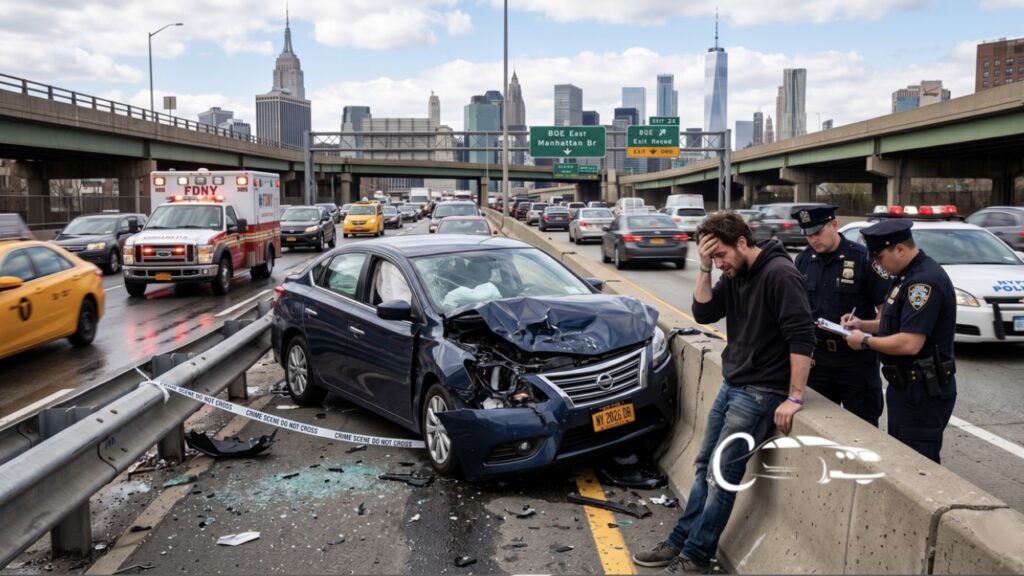
A Complete 2026 Guide for New York Drivers
Updated for 2026 | New York State Law | SR-22 Requirements | Coverage Options
Table of Contents
Introduction
A DUI conviction in New York State triggers a cascade of consequences that extend far beyond the courtroom. Among the most financially significant of these is the impact on your auto insurance. A single drunk-driving offense can cause your car insurance premiums to skyrocket by 80 to 300 percent, place you in the high-risk driver category for years, and require you to file an SR-22 certificate with the New York DMV.
This guide is designed to walk you through everything you need to know about car insurance after a DUI in New York in 2026, from understanding what happens to your policy immediately after a conviction, to finding affordable coverage, meeting state requirements, and eventually rebuilding your driving record. Whether you are a first-time offender or navigating a repeat conviction, the information in this article will help you make informed decisions and avoid costly mistakes.
What Counts as a DUI in New York State?
New York uses several legal terms to describe impaired driving offenses, and each carries different consequences for your insurance rates and license status.
DWI (Driving While Intoxicated)
The most common charge, a DWI in New York applies when a driver’s blood alcohol content (BAC) is 0.08% or higher. For commercial drivers, the threshold is 0.04%, and for drivers under the age of 21, any BAC of 0.02% or above triggers a DWAI charge under Zero Tolerance laws.
DWAI (Driving While Ability Impaired)
A DWAI is a lesser charge than a DWI and applies when a driver’s BAC is between 0.05% and 0.07%, or when the impairment is caused by drugs rather than alcohol alone. While legally considered a traffic infraction rather than a misdemeanor for a first offense, a DWAI still has a serious negative impact on your insurance premiums.
Aggravated DWI
An Aggravated DWI in New York applies when a driver’s BAC is 0.18% or higher. This charge carries steeper fines, longer license revocations, and an even more severe impact on your insurance rates. Insurers treat an aggravated DWI similarly to a felony-level offense when calculating risk.
DWAI Drugs and DWAI Combined Influence
These charges apply to drivers impaired by controlled substances or a combination of drugs and alcohol. From an insurance standpoint, all DWAI variants result in significant premium increases and potential policy cancellations.
Immediate Consequences for Your Car Insurance
When you are convicted of a DUI or DWI in New York, several things happen in rapid succession that directly affect your auto insurance coverage and costs.
1. Policy Cancellation or Non-Renewal
Many standard insurance carriers will cancel your existing policy or decline to renew it upon learning of a DUI conviction. New York law allows insurers to cancel a policy mid-term for certain violations, including DUI-related convictions. You should expect to receive a notice of cancellation or non-renewal within weeks of your conviction being reported to the DMV.
Under New York insurance law, insurers are required to provide at least 30 days notice before canceling a policy and at least 45 days notice before non-renewal. However, in cases of serious violations like DUI, some insurers may invoke shorter cancellation timelines permitted under specific policy language.
2. Reclassification as a High-Risk Driver
Once your insurer becomes aware of a DUI conviction, you will be reclassified as a high-risk driver. This classification means that standard insurance carriers may refuse to cover you altogether, forcing you into the non-standard or high-risk insurance market, where premiums are substantially higher. High-risk auto insurance is specifically designed for drivers with DUI convictions, serious accidents, multiple violations, or lapsed coverage.
3. Dramatic Premium Increases
If your current insurer agrees to maintain your coverage after a DUI, expect your premiums to rise dramatically. On average, New York drivers see their car insurance premiums increase by 80 to 300 percent following a DUI conviction. The actual increase depends on several factors, including your prior driving record, the specific insurer, your age, the county you live in, and whether any accident accompanied the DUI.
4. Loss of Discounts
Any safe driver discounts, good driver rebates, or loyalty discounts you previously enjoyed will almost certainly be eliminated after a DUI conviction. These discounts can represent anywhere from 10 to 30 percent savings on your premium, so their removal compounds the rate increase you will experience.
Understanding the SR-22 Requirement in New York
One of the most important, and frequently misunderstood, requirements following a DUI in New York is the SR-22. Understanding exactly what it is, what it costs, and how long you will need it is critical to maintaining your driving privileges.
What Is an SR-22?
An SR-22 is not a type of insurance policy. It is a certificate of financial responsibility that your insurance company files with the New York Department of Motor Vehicles on your behalf. The SR-22 confirms that you carry at least the minimum required auto insurance coverage mandated by the state. It serves as proof to the DMV that you are meeting your financial responsibility obligations as a high-risk driver.
When Is SR-22 Required in New York?
In New York, an SR-22 is typically required when your license has been revoked or suspended following a DUI conviction and you are seeking reinstatement. The DMV will notify you of the specific requirements at the time of your conviction and license action. Not every DUI results in a mandatory SR-22 requirement, but most do, particularly for DWI convictions and aggravated DWIs.
How Long Must You Carry SR-22 in New York?
New York generally requires drivers to maintain continuous SR-22 coverage for a period of three years following the restoration of their driving privileges. Any lapse in coverage during this period will result in your insurer notifying the DMV, which can trigger a new suspension of your license.
How Much Does SR-22 Filing Cost?
Most insurance companies charge a one-time filing fee to submit the SR-22 certificate on your behalf. This fee typically ranges from $15 to $50. The far larger financial impact is the elevated premium you will pay for the underlying insurance policy required to support the SR-22 filing. Over a three-year period, the total additional cost of SR-22-related insurance in New York can range from $5,000 to $15,000 or more, depending on the insurer and your specific risk profile.
What Happens If Your SR-22 Lapses?
If your insurance policy is canceled, lapses, or you switch insurers without maintaining continuous coverage, your insurance company is legally obligated to notify the DMV immediately by filing an SR-26 form. This triggers an automatic license suspension, and you will need to restart the SR-22 requirement period from the beginning. Avoiding any gap in coverage is therefore essential.
New York Minimum Coverage Requirements vs. Recommended Coverage
Below is a breakdown of New York State’s minimum auto insurance requirements alongside the coverage levels that are advisable for drivers managing a DUI conviction and SR-22 obligation.
| Coverage Type | Minimum NY Requirement | Recommended for DUI |
|---|---|---|
| Bodily Injury Liability (per person) | $25,000 | $100,000 |
| Bodily Injury Liability (per accident) | $50,000 | $300,000 |
| Property Damage Liability | $10,000 | $50,000 |
| Personal Injury Protection (PIP) | $50,000 | $50,000 (base) |
| Uninsured Motorist | $25,000 / $50,000 | $100,000 / $300,000 |
| Comprehensive & Collision | Not required | Strongly recommended |
Note: Carrying only minimum coverage as a high-risk driver is technically legal but financially risky. In the event of a serious at-fault accident, minimum liability limits may be insufficient to cover damages, exposing you to personal financial liability. Given that DUI offenders are statistically at a higher risk of future incidents, higher liability limits provide meaningful protection.
Car Insurance Rate Comparison: Top Insurers for DUI Drivers in New York 2026
Not all insurance companies treat DUI convictions equally. Some carriers specialize in high-risk drivers and offer more competitive rates even for those with a DUI on record. The table below compares average annual premium estimates for New York drivers following a first DUI conviction as of 2026. These figures represent estimates and actual rates will vary based on individual factors including age, vehicle, location, and coverage level.
| Insurer | Avg. Annual Premium (Post-DUI) | SR-22 Filing | Min. Wait Period | Notes |
|---|---|---|---|---|
| Progressive | $4,200 – $5,800 | Yes | 3 Years | Strong DUI-record acceptance rate |
| State Farm | $3,900 – $5,200 | Yes | 3-5 Years | Rates vary widely by county |
| GEICO | $4,500 – $6,100 | Yes | 3 Years | May non-renew after first DUI |
| Allstate | $4,800 – $6,500 | Yes | 5 Years | Higher base but broad coverage |
| Dairyland | $5,000 – $7,200 | Yes | 1-3 Years | Specializes in high-risk drivers |
| Bristol West | $5,200 – $7,800 | Yes | 1-2 Years | Non-standard market, easy approval |
| The General | $5,500 – $8,000 | Yes | 1-2 Years | High-risk specialist, higher premiums |
| Nationwide | $4,100 – $5,600 | Yes | 3-5 Years | SmartRide discount may offset costs |
Important: Rates shown are estimated annual premiums for a full-coverage policy following a first DUI conviction in New York State. These are averages and individual quotes may be higher or lower. Always obtain multiple quotes before selecting a carrier. Non-standard carriers like Dairyland, Bristol West, and The General are more likely to offer coverage to high-risk drivers but typically charge higher premiums in exchange for greater accessibility.
New York DMV License Actions Following a DUI
Understanding what happens to your driver’s license after a DUI is closely tied to your insurance situation, since you cannot legally drive without both a valid license and active insurance coverage. Here is what to expect from the New York DMV.
License Revocation vs. Suspension
New York uses license revocation for DWI convictions, which is more severe than a suspension. A revocation means your license is permanently terminated, and you must apply for a new license once the revocation period has ended. A suspension is a temporary withholding of your driving privileges for a fixed period.
Revocation Periods by Offense
- First DWI: Minimum 6-month revocation
- Second DWI within 10 years: Minimum 18-month revocation
- Third DWI within 10 years: Minimum 18-month revocation, may result in permanent revocation
- Aggravated DWI (BAC 0.18% or higher): Minimum 1-year revocation for first offense
- DWAI (first offense): 90-day suspension
- Refusal to submit to chemical test: 1-year suspension
Conditional License and the IDP
Following a DWI conviction, New York drivers may be eligible for a Conditional License through the Impaired Driver Program (IDP), formerly known as the Drinking Driver Program (DDP). This allows you to drive for specific purposes, such as traveling to work, school, medical appointments, or IDP classes, while your regular license is revoked. A Conditional License does not restore full driving privileges and comes with strict limitations.
Ignition Interlock Device Requirements
New York State law requires all DWI and aggravated DWI offenders to install and maintain a certified ignition interlock device (IID) on every vehicle they own or operate for a minimum of 12 months. The IID requires the driver to blow into a breathalyzer before the vehicle will start. The cost of IID installation and monthly monitoring fees, typically ranging from $70 to $150 per month, is borne by the driver.
For insurance purposes, the presence of an IID may be viewed positively by some insurers as a risk-reduction measure, although it will not offset the DUI surcharge in a meaningful way in the short term.
How to Find Car Insurance After a DUI in New York
After a DUI conviction, finding affordable car insurance in New York requires a different approach than purchasing standard coverage. Here is a practical strategy for securing coverage without paying more than necessary.
Step 1: Do Not Wait to Seek Coverage
Many DUI offenders make the mistake of waiting until their license is reinstated before seeking new insurance coverage. This creates a gap in coverage history that insurers use to justify even higher premiums. Begin researching insurance options as soon as you are aware of your conviction, even if your license is currently revoked. Some insurers offer non-owner SR-22 policies, which provide liability coverage and satisfy the SR-22 filing requirement even when you do not currently own or drive a vehicle.
Step 2: Work with an Independent Insurance Agent
Independent insurance agents have access to multiple carriers, including non-standard and high-risk market insurers, and can shop across providers on your behalf. They are often more effective than going directly to a single carrier when your risk profile is complex. Look for agents who specialize in high-risk auto insurance in New York.
Step 3: Check the New York Automobile Insurance Plan (NYAIP)
If you are unable to obtain coverage through the voluntary market, the New York Automobile Insurance Plan, commonly referred to as the assigned risk pool, is a state-backed program that guarantees coverage for drivers who cannot obtain it elsewhere. Under the NYAIP, insurers are required to accept assigned applicants regardless of their driving history. However, NYAIP premiums are typically among the highest available, and it should be viewed as a last resort rather than a first option.
Step 4: Compare Quotes Aggressively
Do not accept the first quote you receive. Rates vary enormously between carriers for DUI-affected drivers. Obtain at least five to seven quotes from different companies, including both standard carriers who may still offer coverage at a premium, and non-standard carriers who specialize in high-risk drivers. Online comparison tools can help, but direct outreach to insurers often yields more accurate quotes for complex risk profiles.
Step 5: Consider Telematics and Usage-Based Insurance
Some insurers now offer telematics or usage-based insurance programs that use a mobile app or device to track your actual driving behavior. If you demonstrate safe driving habits after your DUI, these programs may help you earn premium discounts that offset some of the DUI surcharge. Progressive’s Snapshot program and Nationwide’s SmartRide program are among the options available to New York drivers, though eligibility and discount levels vary.
Key Factors That Affect Your Post-DUI Insurance Rate in New York
Not all DUI convictions result in the same insurance consequences. Several factors influence how significantly your rates will increase and for how long.
BAC Level at Time of Arrest
A higher BAC at the time of arrest signals a greater degree of impairment to insurers. Drivers convicted of aggravated DWI with a BAC of 0.18% or above typically face higher rate increases than those convicted of a standard DWI at 0.08%.
Prior Driving Record
A driver with an otherwise clean record before the DUI will generally receive more favorable treatment than one with a history of speeding tickets, prior violations, or at-fault accidents. Insurers look at the overall risk profile, and a DUI layered on top of other violations can result in exponentially higher premiums.
Whether an Accident Occurred
A DUI that involves a collision, particularly one causing injury or significant property damage, is treated far more seriously by insurers than a DUI resulting from a traffic stop. A DUI-related accident can trigger rate increases at the higher end of the spectrum and may result in some carriers permanently declining to insure you.
Age of the Driver
Young drivers, particularly those under 25, already pay higher premiums due to their statistically elevated accident risk. A DUI conviction on top of a young driver’s rate category can result in premiums that are extremely high, sometimes in excess of $8,000 to $10,000 annually for full coverage.
County of Residence
New York is a large and diverse state, and auto insurance rates vary significantly by location. Drivers in New York City’s five boroughs, particularly Brooklyn and the Bronx, already face the highest base rates in the state. A DUI surcharge applied to an already elevated urban rate produces premiums that are substantially higher than those faced by rural upstate New York drivers.
Type and Value of Vehicle
The make, model, and age of your vehicle affects the collision and comprehensive portions of your coverage. Driving an expensive late-model vehicle after a DUI significantly increases the total cost of a full-coverage policy. Many high-risk drivers opt to downgrade to an older, less expensive vehicle to reduce the total insurance cost during the surcharge period.
How Long Does a DUI Affect Your Insurance in New York?
One of the most common questions from DUI offenders is how long they will be penalized on their insurance rates. The answer depends on several factors.
The Standard Lookback Period
New York insurance companies typically look back three to five years when calculating rates. This means a DUI conviction will typically affect your premiums for at least three years from the date of conviction, and potentially for five years with some carriers. After this period, if you have maintained a clean driving record, many insurers will begin to treat the DUI with diminishing weight or remove it from their rate calculations entirely.
DMV Record vs. Insurer Lookback
It is important to understand that the DUI will remain on your New York DMV record for ten years for the purpose of determining penalties for any future DUI offense. However, the insurance surcharge period is separate from this and is generally governed by the insurer’s own underwriting guidelines rather than DMV lookback periods.
Early Recovery Strategies
While you cannot erase a DUI from your record, there are strategies that can help you reduce premiums sooner:
- Maintaining continuous insurance coverage without any lapses
- Taking a defensive driving course approved by the New York DMV, which can earn a 10 percent premium discount
- Completing the Impaired Driver Program (IDP) voluntarily
- Keeping your vehicle use low and choosing a vehicle with high safety ratings
- Requesting re-rating from your insurer after two years of clean driving post-conviction
Strategies to Reduce the Cost of Insurance After a DUI in New York
While the financial hit from a DUI conviction on your insurance is unavoidable, there are practical steps you can take to minimize the total cost over the surcharge period.
Raise Your Deductible
Increasing your collision and comprehensive deductible from $500 to $1,000 or even $2,500 can meaningfully reduce your annual premium. This strategy transfers more financial risk to you in the event of an accident, but it can make your monthly payments manageable while you work through the DUI surcharge period.
Bundle Insurance Policies
If you have homeowner’s insurance, renter’s insurance, or life insurance, bundling multiple policies with the same carrier can yield discounts that partially offset the DUI surcharge. Multi-policy discounts of 10 to 15 percent are common with carriers that offer bundling for high-risk auto policyholders.
Pay Annually Instead of Monthly
Many insurers charge an installment fee for monthly payment plans, which can add $50 to $150 per year to the total cost. Paying your premium in full annually, if financially feasible, eliminates this surcharge entirely.
Reduce Coverage on Older Vehicles
If you own an older vehicle with low market value, dropping collision and comprehensive coverage and carrying only the minimum required liability coverage can substantially reduce your premium. As a general rule, if the annual cost of collision and comprehensive coverage exceeds 10 percent of the vehicle’s value, it may not be cost-effective to maintain those coverages.
Take Advantage of All Available Discounts
Even high-risk drivers may qualify for certain discounts that are not contingent on driving record, including multi-car discounts, anti-theft device discounts, paperless billing discounts, and occupational discounts for certain professions. Ask each insurer specifically what discounts you qualify for rather than assuming they will automatically apply them.
Non-Owner SR-22 Insurance in New York
If your license has been revoked following a DUI conviction and you do not currently own a vehicle, you may still need to file an SR-22 to satisfy DMV requirements for license reinstatement. In this situation, a non-owner SR-22 policy is the appropriate solution.
A non-owner insurance policy provides liability coverage when you drive a vehicle you do not own, such as a rental car or a borrowed vehicle. It does not provide collision or comprehensive coverage, as those coverages are tied to a specific vehicle. The primary purpose of a non-owner policy in the DUI context is to satisfy the SR-22 filing requirement at a lower premium than a standard auto policy.
Non-owner SR-22 policies in New York typically cost between $200 and $600 per year, depending on the carrier and your specific risk profile. This makes them a cost-effective option for the period between your DUI conviction and the reinstatement of your license and the purchase of a new vehicle.
The New York Automobile Insurance Plan (NYAIP) Explained
The NYAIP is New York State’s assigned risk mechanism of last resort for drivers who cannot obtain voluntary market coverage. Every auto insurer licensed to do business in New York is required to participate in the NYAIP and accept a proportional share of assigned risk drivers.
How It Works
To apply for coverage through the NYAIP, you submit an application through any licensed insurance agent or broker in New York. The NYAIP system assigns your application to a participating insurer, who is then required to issue you a policy. The insurer cannot decline the assignment based on your driving record.
NYAIP Costs
Coverage through the NYAIP is substantially more expensive than voluntary market coverage for most risk profiles. Annual premiums for full coverage through the assigned risk pool can range from $6,000 to $12,000 or more for DUI-affected drivers in New York City. NYAIP coverage is best viewed as a bridge to eventually requalifying for voluntary market coverage rather than a long-term solution.
Moving Out of the NYAIP
Most drivers who maintain continuous clean driving records for two to three years after their DUI conviction will find that voluntary market carriers begin to offer them coverage at rates lower than NYAIP premiums. Regularly shopping for quotes outside the NYAIP can help you identify when you are eligible to transition back to standard coverage.
The Broader Financial and Legal Impact of a DUI in New York 2026
Beyond the direct insurance costs, a DUI conviction in New York carries a wide range of additional financial consequences that drivers must budget for in 2026.
Fines and Surcharges
- First DWI: Fine of $500 to $1,000 plus a mandatory state surcharge of $400
- Second DWI within 10 years: Fine of $1,000 to $5,000 plus a $400 surcharge
- Aggravated DWI (first offense): Fine of $1,000 to $2,500 plus surcharge
- DWAI (first offense): Fine of $300 to $500 plus a $260 surcharge
License Restoration Fees
To restore your driver’s license following a revocation, New York charges a restoration fee of $100, plus any applicable application fees. If you were also required to complete the IDP, there are program fees typically ranging from $225 to $325.
Legal Defense Costs
Attorney fees for DUI defense in New York typically range from $3,000 to $10,000 or more for contested cases that go to trial. Even straightforward cases requiring only plea negotiations can cost $1,500 to $4,000 in legal fees.
Total Five-Year Cost of a DUI in New York
When you add up all costs including fines, legal fees, IID installation, program fees, license restoration, and elevated insurance premiums over three to five years, the total financial impact of a first DUI conviction in New York typically ranges from $20,000 to $45,000. For repeat offenders or those involved in accidents, costs can significantly exceed this range.
Rebuilding Your Driving Record and Insurance Profile After a DUI
A DUI conviction is serious, but it does not permanently define your insurance profile. With consistent effort and responsible behavior, most New York drivers can eventually return to standard insurance rates.
Year 1 to Year 2: Stabilization
Focus on maintaining continuous coverage without lapses, completing all required DMV programs and IDP requirements, operating your vehicle safely and without any additional violations, and keeping your SR-22 current and active.
Year 2 to Year 3: Improvement
Begin shopping for quotes with a broader range of carriers, including those that may have declined you initially. Your clean driving behavior since the conviction is now being reflected in their systems. Consider requesting a re-rating review from your current insurer if you have been with them for at least 18 months without incident.
Year 3 and Beyond: Recovery
After three years of clean driving, many New York drivers find that standard market insurers begin to compete for their business. The SR-22 requirement will be ending, which reduces your administrative burden. Continue shopping annually and be transparent about your conviction, as attempting to conceal it can result in policy voidance and claims denial.
Company-by-Company Comparison: Key Details
When evaluating insurers post-DUI, the comparison table provided earlier in this guide offers a starting point, but several additional nuances are worth understanding about each major carrier.
Progressive
progressive is widely regarded as one of the most DUI-friendly major carriers in New York. The company has built its brand around accepting higher-risk drivers and often provides competitive rates even for those with a recent DUI. Their Snapshot telematics program can help lower rates further for safe post-conviction drivers.
State Farm
State Farm’s response to DUI convictions varies significantly by the agent and the specific policy details. In some cases, particularly for long-time customers with otherwise clean records, State Farm may retain the policy with a significant surcharge rather than canceling. However, rates vary considerably by region within New York State.
GEICO
GEICO takes a more conservative approach to DUI-affected drivers and is more likely than some competitors to non-renew policies following a conviction. For drivers GEICO does agree to insure post-DUI, the rate increases tend to be at the higher end of the market range.
Dairyland and Bristol West
Both of these carriers specialize in the non-standard market and are explicitly designed to serve high-risk drivers including those with DUI convictions. Their approval process is generally faster and less restrictive than standard carriers, but their base premiums are also meaningfully higher. They are a practical option for drivers who have been declined by standard carriers.
Frequently Asked Questions (FAQs)
The following questions represent the most common inquiries from New York drivers dealing with insurance after a DUI conviction.
Q1: How much will my car insurance go up after a DUI in New York?
The average increase ranges from 80 to 300 percent, depending on your prior driving record, the insurer, and the specifics of the conviction. A New York driver paying $1,500 per year before a DUI might pay between $2,700 and $6,000 per year after. The increase is applied at renewal or when coverage is newly obtained post-conviction.
Q2: Can my insurance company cancel my policy after a DUI?
Yes. In New York, insurers can cancel your policy mid-term for a DUI conviction, though they are required to provide at least 30 days notice. Many insurers will wait until the renewal date to non-renew rather than canceling mid-term, but cancellation is legally permitted and does occur.
Q3: Is SR-22 required for a first DUI in New York?
Not always automatically, but it is very commonly required as part of the license reinstatement process following a DWI conviction. The New York DMV will specify whether you need to file an SR-22 as part of the conditions for restoring your driving privileges. If required, your insurer files it on your behalf.
Q4: What is a non-owner SR-22 policy, and do I need one?
A non-owner SR-22 policy provides liability coverage for people who do not own a vehicle but need to satisfy an SR-22 filing requirement to get their license back. If your license was revoked after a DUI and you do not own a car, a non-owner policy allows you to meet the DMV’s insurance requirement at a lower cost than a standard auto policy.
Q5: How long does a DUI stay on my New York insurance record?
For insurance rating purposes, most carriers look back three to five years. The DUI will typically affect your premiums for at least three years. For DMV purposes, a DUI conviction stays on your driving record for 10 years and counts toward repeat offender status if you receive another DUI within that window.
Q6: What is the cheapest car insurance option after a DUI in New York?
The cheapest option will vary by individual profile, but generally Progressive, State Farm, and Nationwide offer more competitive DUI rates among major carriers. Non-standard carriers like Dairyland and Bristol West offer easier access but typically at higher premiums. Shopping aggressively across at least five to seven carriers and working with an independent agent specializing in high-risk coverage gives you the best chance of finding the lowest available rate.
Q7: Can I get car insurance if my license is currently revoked?
Yes. You can and often should obtain car insurance coverage even while your license is revoked. A non-owner SR-22 policy is available for those without vehicles, and even drivers with vehicles can maintain their policy during a revocation period. Having continuous insurance coverage on record is beneficial when you reapply for your license.
Q8: Will a DWAI affect my insurance as much as a DWI in New York?
A DWAI (Driving While Ability Impaired) does result in insurance premium increases, but the impact is generally somewhat less severe than a DWI for most carriers. This is because a DWAI is legally classified as a traffic infraction rather than a misdemeanor for a first offense. However, insurers still treat it as a serious risk indicator, and premium increases of 40 to 100 percent are common.
Q9: Does New York offer any programs to help with the cost of SR-22 insurance?
New York does not have a state-funded subsidy program for SR-22 insurance costs. However, the NYAIP exists to ensure that no driver is completely unable to obtain coverage. Completing the IDP program and maintaining a clean record are the most effective ways to reduce costs over time. Some nonprofit credit counseling services can help with budgeting for the increased insurance costs following a DUI.
Q10: Can I be denied car insurance entirely after a DUI in New York?
In practice, no. While individual private insurers can decline to cover you, the existence of the New York Automobile Insurance Plan ensures that any licensed New York driver can obtain at least minimum required coverage. If you are declined by multiple voluntary market carriers, an independent agent can assist you with applying through the NYAIP assigned risk pool.
Q11: Does completing the Impaired Driver Program (IDP) reduce my insurance rates?
Completing the IDP is primarily a legal requirement for license reinstatement rather than a direct insurance discount. However, some insurers may view program completion favorably when assessing overall risk, and it demonstrates to the DMV and to insurers that you have taken the conviction seriously. The more significant insurance discount opportunity comes from completing a DMV-approved defensive driving course, which can earn a 10 percent premium reduction.
Q12: What should I do immediately after being charged with a DUI in New York?
Contact a DUI defense attorney promptly to understand your legal options. Review your current insurance policy and contact your insurer to understand your coverage status. Begin researching alternative insurance options in case your policy is canceled. Do not drive without valid insurance under any circumstances, as doing so compounds your legal and financial exposure significantly.
Conclusion
Dealing with the insurance consequences of a DUI conviction in New York is challenging, but it is entirely manageable with the right information and approach. The key is to act quickly, shop aggressively for coverage, understand the SR-22 requirements specific to your situation, and commit to clean and responsible driving behavior over the multi-year surcharge period.
The financial impact of a DUI on car insurance in New York is substantial, but it is not permanent. Most drivers who maintain continuous coverage, avoid additional violations, and take advantage of available discounts will find that their insurance rates begin to recover meaningfully within two to three years. The path back to standard market rates is open to almost every driver willing to put in the consistent effort required.
If you are currently navigating the insurance landscape after a DUI, consider reaching out to an independent insurance agent with experience in high-risk coverage in New York, and ensure that any lapse in coverage is avoided at all costs. The cost of being uninsured, both legally and financially, far exceeds even the most elevated post-DUI insurance premiums.
Read Also:
Car Insurance after Accident New York Surcharge Explained
Minimum Liability Insurance New York 2026: The Complete Guide Every Driver Needs
This article is for informational purposes only and does not constitute legal or financial advice.
Always consult a licensed insurance professional and legal counsel for guidance specific to your situation.
Information reflects New York State laws and market conditions as of 2026.