
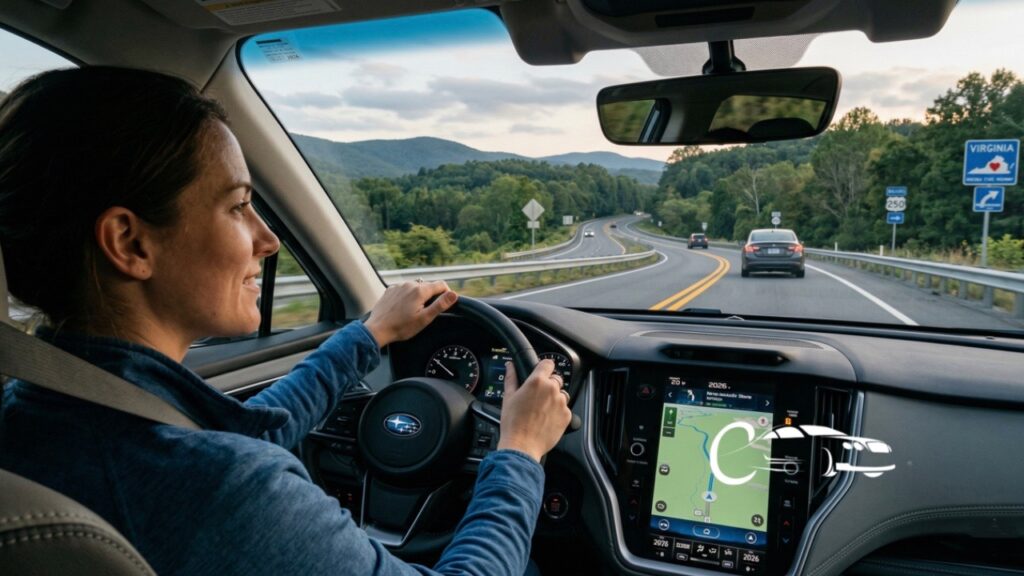
If you drive in Virginia, the last two years have rewritten almost every rule you thought you knew about car insurance in this state. New mandatory coverage requirements. The end of a loophole that let drivers legally avoid buying a policy altogether. Higher minimum limits. And a system that now holds uninsured drivers accountable in ways the Commonwealth never did before.
This is not a state where you can let your policy renew on autopilot and assume everything is still fine. Virginia has changed — significantly — and if your coverage hasn’t kept pace, you may be both underinsured and out of compliance without even realizing it.
This guide walks you through where Virginia stands in 2026: what the law actually requires today, what changed back in 2024 and why it mattered, what changed again at the start of 2025, and what it all means for your wallet and your protection on the road.
Table of Contents
- Is Car Insurance Required in Virginia?
- The 2024 Change That Made Virginia History
- What Are the Minimum Car Insurance Requirements in Virginia in 2026?
- Virginia’s Minimum Coverage Limits: Then vs. Now
- Uninsured and Underinsured Motorist Coverage in Virginia
- What Happens If You Drive Without Insurance in Virginia?
- Is Minimum Coverage Enough in Virginia?
- Optional Coverages Worth Considering
- How Much Does Car Insurance Cost in Virginia in 2026?
- Cheapest Car Insurance Companies in Virginia (2026)
- How to Lower Your Rate Without Sacrificing Coverage
- Frequently Asked Questions
- Final Takeaway
Is Car Insurance Required in Virginia?
Yes — fully and without exception.
As of July 1, 2024, Virginia became a mandatory auto insurance state. Every driver operating a registered vehicle on public roads in the Commonwealth must carry at least the state-mandated minimum liability coverage. There is no longer any alternative, no loophole, and no workaround.
To register a vehicle with the Virginia DMV, you must certify that you carry insurance meeting the state’s minimum requirements. The DMV verifies this information directly with your insurer. If your coverage lapses at any point, the consequences are immediate and serious.
The 2024 Change That Made Virginia History
This is the section that rewrote the rulebook — and it’s worth understanding fully, because it was one of the most significant auto insurance reforms in Virginia’s history.
What the Old Law Allowed
For decades, Virginia operated under a system that was almost unique in the United States. Drivers who did not want to purchase car insurance could legally register their vehicle and operate it on public roads by paying a $500 annual Uninsured Motor Vehicle (UMV) fee to the DMV at the time of registration.
This fee did not provide any insurance coverage. It gave drivers no protection for their own injuries, no coverage for passengers, and no ability to pay for damage they caused to other people’s vehicles or bodies. It simply granted legal permission to drive uninsured. If an uninsured driver caused an accident, the victim had little recourse beyond their own uninsured motorist coverage — or a lawsuit against someone who, by definition, hadn’t prioritized financial responsibility.
The revenue from these fees went into Virginia’s Uninsured Motorist Fund, but the amounts were minimal. According to the Virginia Department of Planning and Budget, the fee collected roughly $650,000 in 2022 — representing only about 1,300 drivers who had formally registered as uninsured. The true uninsured driver rate in the state, however, was estimated at nearly 11% of all drivers — a gap that highlighted how many drivers were simply driving illegally with no coverage and no fee paid at all.
Why Virginia Eliminated It
The system was fundamentally unfair to responsible drivers. Insured drivers absorbed the costs of accidents caused by people who paid $500 for legal permission to cause financial harm without consequence. Insurers priced uninsured motorist coverage higher to account for the elevated risk. And the $500 fee was, in many cases, cheaper than actual insurance — meaning the law created a perverse incentive to opt out.
Virginia’s General Assembly passed Senate Bill 951, which eliminated the UMV fee effective July 1, 2024. With a single legislative act, Virginia closed a legal loophole that had existed for generations and became a mandatory insurance state — leaving New Hampshire as the only state in the country that still allows drivers to operate uninsured under certain conditions.
What It Meant for Virginia Drivers
For the overwhelming majority of Virginians who were already insured, the change had no direct impact on their day-to-day driving. But it had an indirect one: more drivers on the road carrying insurance means more coverage available when accidents happen, fewer claims being routed through uninsured motorist policies, and — at least in theory — downward pressure on what insured drivers pay.
For the roughly 6,100 drivers who had formally registered as uninsured through the fee program, the change meant a hard deadline: get a policy or get off the road.
And for anyone hit by an at-fault driver going forward, the landscape improved. Under the old system, a driver who paid the UMV fee was technically legal but completely uncovered. Post-July 2024, if an at-fault driver has no insurance, they are breaking the law — not exercising a legal option.
What Are the Minimum Car Insurance Requirements in Virginia in 2026?
Virginia’s minimum liability requirements changed again on January 1, 2025, and those new limits are what govern every policy in force today.
Here is what Virginia law currently requires every driver to carry:
| Coverage Type | Minimum Required |
| Bodily Injury – Per Person | $50,000 |
| Bodily Injury – Per Accident | $100,000 |
| Property Damage – Per Accident | $25,000 |
| Uninsured Motorist BI – Per Person | $50,000 |
| Uninsured Motorist BI – Per Accident | $100,000 |
| Uninsured Motorist PD – Per Accident | $25,000 |
This is written as 50/100/25 in standard insurance shorthand.
These are not optional minimums. Every licensed Virginia driver with a registered vehicle must carry at least this level of coverage. If your policy predates January 2025 and hasn’t been updated, it may no longer meet the current state requirement — and that exposes you to both legal penalties and significant financial gaps.
Virginia’s Minimum Coverage Limits: Then vs. Now
The 2025 minimum limit increase was substantial. To put it in perspective:
| Period | Bodily Injury (Per Person) | Bodily Injury (Per Accident) | Property Damage |
| Before 2022 | $25,000 | $50,000 | $20,000 |
| January 2022 – December 2024 | $30,000 | $60,000 | $20,000 |
| January 2025 – Present | $50,000 | $100,000 | $25,000 |
The new minimums are nearly double what Virginia required as recently as 2021. That’s not an accident — legislators recognized that the old limits were simply inadequate to cover the real cost of serious accidents, given rising medical costs, vehicle repair expenses, and the increasing value of cars on the road.
With these new limits, Virginia now ranks among the ten states with the highest minimum liability insurance requirements in the country. That’s a meaningful shift for a state that, just two years ago, didn’t even require drivers to have insurance at all.
Uninsured and Underinsured Motorist Coverage in Virginia
Virginia requires UM/UIM coverage in the same amounts as your liability coverage — meaning it must match your 50/100/25 minimums. This is not optional.
The 2023 Stacking Change
One important reform that often gets overlooked: as of July 1, 2023, Virginia changed how UM/UIM coverage interacts with an at-fault driver’s liability policy. Under the old rules, your uninsured/underinsured motorist coverage would only pay the difference between what the at-fault driver’s insurer covered and your own policy’s limits. Now, your UM/UIM coverage stacks on top of the at-fault driver’s liability coverage rather than being reduced by it.
In practical terms: if an at-fault driver’s $50,000 liability limit doesn’t fully cover your $120,000 in medical bills, your own UM/UIM coverage can now pay an additional amount up to its own limits — rather than simply topping up to the difference. This can result in significantly more compensation available to injured Virginia drivers.
Given that nearly 12% of Virginia drivers are estimated to be uninsured, maintaining strong UM/UIM coverage is one of the highest-value protections you can carry.
What Happens If You Drive Without Insurance in Virginia?
The penalties are serious and layered. This is no longer a state where driving uninsured is a manageable inconvenience.
If you are caught driving without insurance in Virginia, you face:
- License and registration suspension — effective immediately upon DMV notification
- $600 noncompliance fee — must be paid before reinstatement
- $145 reinstatement fee — separate from the noncompliance charge
- SR-22 filing requirement for three years — you must maintain proof of financial responsibility for 36 consecutive months
- Class 3 misdemeanor — if you knowingly operate an uninsured vehicle
- Personal liability for all damages, injuries, and property costs from any accident you cause while uninsured
Beyond the fines, the downstream cost of an SR-22 requirement adds real expense. SR-22 insurance in Virginia typically costs significantly more than standard coverage because insurers classify you as high-risk for the duration of the filing period. The total financial consequence of a single uninsured driving incident can easily exceed $2,000 to $3,000 in fees, fines, and elevated premiums — far more than maintaining continuous coverage would have cost.
Is Minimum Coverage Enough in Virginia?
Technically, 50/100/25 meets the legal requirement. Practically, it may leave you dangerously exposed.
Here’s the reality check: the average cost of a new vehicle in the United States now exceeds $48,000. A serious multi-car accident can easily generate $200,000 or more in medical bills, lost wages, and property damage. If you cause an accident and your liability coverage is exhausted, you are personally responsible for every dollar beyond your limit — meaning your savings, your home, and your future earnings can be at legal risk.
For many Virginia drivers, particularly those who own assets worth protecting, increasing liability limits to 100/300/100 — or even higher, is not a luxury. It’s basic financial prudence. The premium difference between state minimum and meaningfully higher limits is often smaller than drivers expect, especially when bundled with home or renters insurance.
Additionally, consider:
- Collision coverage — covers your own vehicle’s damage after an at-fault accident. Not required by the state, but required by most lenders if you’re financing or leasing.
- Comprehensive coverage — covers theft, weather, animals, and non-collision damage to your vehicle.
- Medical Payments (MedPay) — covers medical bills for you and your passengers regardless of fault. Optional in Virginia but adds meaningful first-party protection.
Optional Coverages Worth Considering
Virginia law sets the floor. What you build above it is your call — but here are the options most worth evaluating seriously:
Higher Liability Limits — Moving from 50/100/25 to 100/300/100 costs relatively little in additional premium and provides dramatically more protection if you cause a serious accident.
Collision — Pays to repair or replace your vehicle after a crash where you’re at fault or where the other driver can’t be identified (hit-and-run). Particularly valuable for vehicles under five years old.
Comprehensive — Covers damage from events outside your control: hail, floods, fire, falling objects, deer strikes. Virginia roads see all of these.
MedPay — Useful if you don’t have robust health insurance or if you want immediate coverage for accident-related medical costs without navigating a liability claim.
Rental Reimbursement — Covers the cost of a rental while your car is being repaired after a covered accident. A modest add-on that eliminates a common frustrating gap.
Roadside Assistance — Emergency towing, battery service, flat tire assistance. Available through most major insurers as a low-cost endorsement.
How Much Does Car Insurance Cost in Virginia in 2026?
Virginia is mid-range among U.S. states for auto insurance costs — not the cheapest, but far from the most expensive. Here are the estimated average annual premiums for 2026:
| Coverage Level | Average Annual Premium |
| State Minimum (50/100/25) | $480 – $700 |
| Full Coverage (50/100/25 + collision + comp) | $1,500 – $2,200 |
| Higher Limits (100/300/100 + full coverage) | $1,800 – $2,600 |
Rates vary significantly by ZIP code, driving record, vehicle, age, credit score, and insurer. Urban areas — particularly Northern Virginia, Richmond, and Virginia Beach — generally run higher than rural regions. A clean driving record in a rural county can see annual minimums well under $500. A driver with a recent at-fault accident in Arlington will pay considerably more.
Cheapest Car Insurance Companies in Virginia (2026)
Not every insurer prices Virginia risk the same way. Here’s how the major carriers compare for minimum coverage in 2026:
| Insurer | Estimated Annual Rate (Minimum Coverage) | Best For |
| Virginia Farm Bureau | $330 – $450 | Rural drivers, long-term members |
| USAA | $380 – $500 | Military families |
| GEICO | $420 – $560 | Clean record, online shoppers |
| State Farm | $430 – $590 | Bundling, agent relationships |
| Erie Insurance | $450 – $610 | Customer service, claims satisfaction |
| Progressive | $460 – $640 | High-risk drivers, flexible payment |
| Allstate | $510 – $700 | Tech features, broad coverage options |
| Nationwide | $490 – $670 | Multi-policy discounts |
Virginia Farm Bureau consistently offers the most competitive rates for minimum coverage in the state, but membership is required and coverage is best suited for rural and suburban Virginia drivers. If you qualify for USAA — active military, veterans, and their immediate families — it’s almost always worth getting a quote before committing to any other carrier.
For drivers who’ve had violations, accidents, or now carry an SR-22 requirement, Progressive and certain non-standard carriers will be more competitive than standard carriers. The gap between the cheapest and most expensive insurer for a high-risk Virginia driver can exceed $800 annually for equivalent coverage.
How to Lower Your Rate Without Sacrificing Coverage
Shop every renewal. Virginia’s insurance market is competitive. Carriers reprice continuously, and the company that offered you the best rate two years ago may no longer be the leader. Get at least three to five quotes at every renewal — it takes less than an hour and consistently generates meaningful savings.
Bundle home and auto. Most major carriers offer discounts of 5% to 15% when you carry both your homeowners or renters insurance and your auto policy with the same company. If you’re not bundling, you’re likely leaving money on the table.
Increase your deductibles on collision and comprehensive. If you have solid emergency savings, raising your collision deductible from $500 to $1,000 reduces your premium without touching your liability or UM/UIM coverage. The trade-off is that you pay more out of pocket in a fender bender — but for most drivers, the annual premium savings make this a rational choice.
Take advantage of telematics discounts. GEICO, Progressive, State Farm, and most major carriers offer usage-based insurance programs that track your driving habits through a mobile app or plug-in device. Safe drivers — particularly those who drive fewer miles than average — regularly see discounts of 10% to 25% through these programs.
Maintain a clean driving record. This is the single most impactful thing a Virginia driver can do for their long-term premium. Even one at-fault accident or serious moving violation can raise your rate by 30% to 50% for three to five years. Defensive driving courses are available in Virginia and can sometimes help offset the impact of recent violations.
Don’t let your coverage lapse. A gap in coverage — even a brief one — signals risk to insurers and will raise your rate when you go to reinstate or find a new policy. Virginia’s post-2024 enforcement environment makes lapse consequences far more immediate than they used to be. Keep your policy active and set up autopay if that helps.
Frequently Asked Questions
Does Virginia still have the uninsured motorist fee? No. The $500 UMV fee was eliminated effective July 1, 2024. Insurance is now mandatory for all registered vehicles in Virginia without exception.
What are Virginia’s current minimum coverage limits? As of January 1, 2025, Virginia requires 50/100/25 — meaning $50,000 per person and $100,000 per accident in bodily injury liability, and $25,000 in property damage liability. UM/UIM coverage must match these limits.
What happens if I can’t afford the new minimum coverage? Driving uninsured is no longer a legal option in Virginia. If affordability is a concern, compare quotes across multiple carriers — rates vary significantly and shopping aggressively is the most effective way to find the floor. Some drivers find that raising deductibles on collision and comprehensive, while maintaining strong liability limits, meaningfully reduces total premium cost.
Is UM/UIM coverage required in Virginia? Yes. Virginia requires uninsured/underinsured motorist coverage in the same amounts as your liability limits — currently 50/100/25.
Does the stacking rule apply to my existing policy? Virginia’s UM/UIM stacking change took effect July 1, 2023 and applies to policies that started or renewed on or after that date. If your policy has renewed since mid-2023, stacking applies.
How does Virginia’s new insurance requirement affect my rates? For most drivers who were already insured, the UMV fee elimination may modestly reduce rates over time as more drivers are now required to be insured and contributing to risk pools. The early evidence suggests rates in Virginia have remained broadly stable, with the higher minimum limits from 2025 being the more significant premium driver for many policies.
Do I need SR-22 insurance in Virginia? SR-22 is required for drivers caught driving uninsured, those with DUI/DWI convictions, and certain other violations. If you’ve been notified by the DMV that SR-22 is required, you must file and maintain it for three years through a licensed insurer. Not all insurers file SR-22s — confirm before purchasing.
Is Virginia an at-fault or no-fault state? Virginia is an at-fault state. The driver who causes the accident is responsible for the resulting costs. Victims can file a claim against the at-fault driver’s insurer, file a claim through their own policy (if applicable), or pursue a lawsuit directly against the at-fault driver.
Final Takeaway
Virginia’s auto insurance environment looks meaningfully different in 2026 than it did even two years ago. The UMV fee is gone. Insurance is mandatory. Minimum limits are higher than they’ve been in the state’s history. And UM/UIM stacking gives injured Virginia drivers more protection than they had before.
If you’re a Virginia driver who’s been on autopilot with your policy — same carrier, same limits, same renewal, year after year — now is the right time to take a closer look. Confirm your limits meet the new 50/100/25 requirements. Evaluate whether minimum coverage is actually adequate for your financial situation. And shop your renewal with at least a few competing quotes.
The state has raised the floor. Make sure your coverage rises with it.
Rates shown are estimates and will vary based on driver profile, ZIP code, vehicle, and insurer. Always verify current requirements with the Virginia DMV or a licensed insurance professional.