
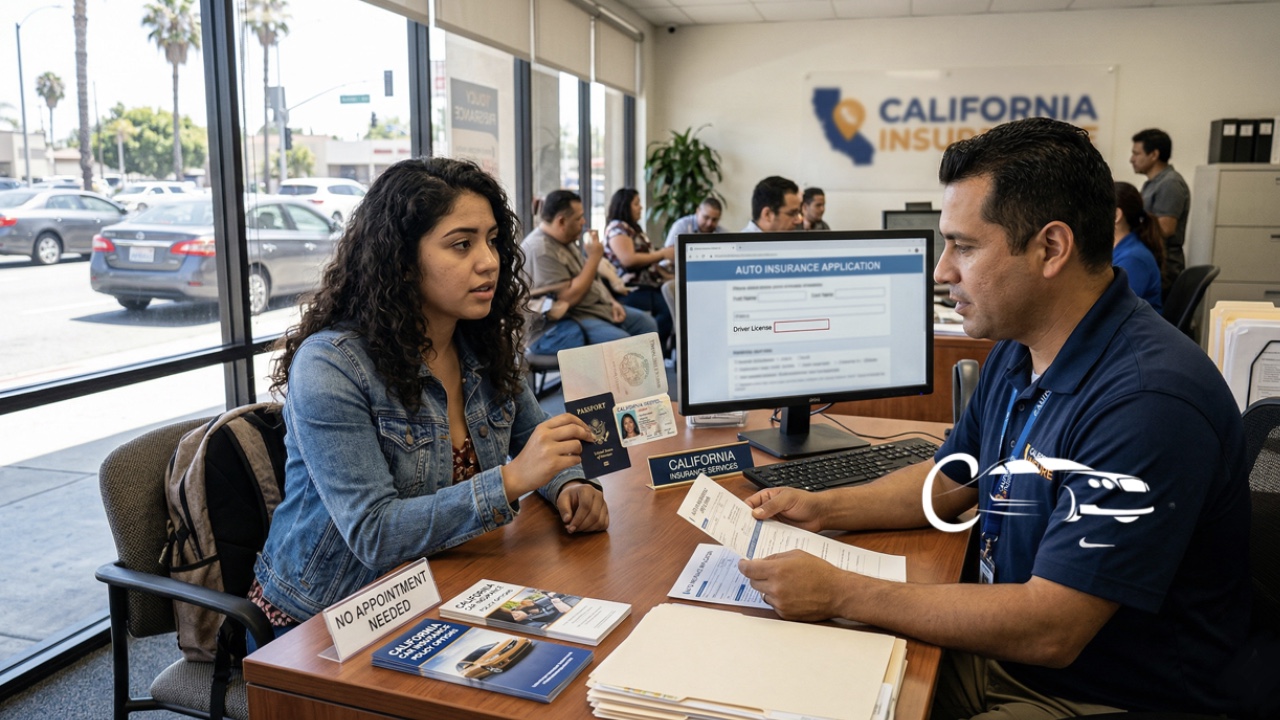
Can You Get Car Insurance Without a License in California
If you are searching this question, you are probably in one of a few very specific situations. Maybe your license was suspended following a DUI and you are trying to figure out your options. Maybe you have a household member who drives your car and you want to insure the vehicle even though you personally cannot drive right now. Or maybe you are a new resident still waiting on your California license but you own a vehicle that needs to be covered.
Whatever brought you here, the short answer is yes, it is possible to get car insurance without a license in California. But it comes with conditions, it is not straightforward, and most insurers will make you work for it. This guide walks through exactly how it works, who qualifies, what it costs, and where the pitfalls are.
Why Would Someone Need Insurance Without a License?
Before getting into the how, it helps to understand the why, because the reason you need insurance without a license affects which path makes the most sense for your situation.
The most common scenarios are a suspended license following a DUI or other serious violation, where the vehicle still needs to be insured and an SR-22 may still be required. Another common situation is owning a vehicle that a licensed household member drives regularly, such as a spouse, parent, or adult child, while you yourself are not currently licensed. Some people are elderly and have stopped driving but still own a vehicle that family members use. Others are new to the country or the state and are in the process of getting their California license but already own a car.
Each of these situations has a slightly different solution, and knowing which one applies to you is the first step toward finding coverage that actually works.
What California Law Says About Insurance and Licensing
California requires every vehicle registered in the state to carry at least the minimum liability insurance. That requirement is tied to the vehicle and its registration, not specifically to whether the owner holds a valid license. So the legal obligation to insure a vehicle exists regardless of your license status.
What California does not require is that the person who owns the insurance policy be a licensed driver. Insurers, however, have their own underwriting rules that go beyond what the law strictly requires, and most of them are cautious about writing policies for unlicensed individuals. It is not illegal to insure a car without a license in California, but finding an insurer willing to do it takes more effort than a standard application.
The state’s minimum liability coverage requirements are $15,000 for injury or death to one person, $30,000 for injury or death to more than one person, and $5,000 for property damage. These minimums apply regardless of who owns the policy.
Can You Actually Get Car Insurance Without a License in California?
Yes, but with important caveats.
Most major insurers will not write a new policy for someone who lists themselves as the primary driver without a valid license. Their systems are built around insuring licensed drivers, and an unlicensed applicant often triggers an automatic decline during the underwriting process.
However, there are two legitimate paths that work for most people in this situation.
The first is listing yourself as the vehicle owner but not as a driver. If there is a licensed driver in your household who will be operating the vehicle, you can list them as the primary driver on the policy while you remain the registered owner. This is a common and perfectly legitimate arrangement. Insurers are generally comfortable with this setup as long as the primary driver is accurately represented and genuinely is the person who drives the vehicle most.
The second path is working with non-standard or specialty insurers who are more flexible about unlicensed policyholders. Some insurers in California’s high-risk market have more accommodating underwriting standards and will write policies for vehicle owners who are not currently licensed, particularly when the vehicle is being driven by a licensed household member or named driver.
What you cannot do is misrepresent yourself as a licensed driver when you are not. That constitutes insurance fraud and can result in your policy being voided, your claims being denied, and potential legal consequences. Always be accurate about your license status when applying.
The DUI Connection: When a Suspended License Meets an SR-22 Requirement
This is where things get particularly relevant if you are here because of a DUI conviction in California. A DUI can result in a suspended license, and a suspended license means you are technically unlicensed during the suspension period. But California may still require you to maintain an SR-22 filing and carry minimum liability coverage as a condition of eventual license reinstatement.
This creates a situation where you need insurance to get your license back, but your license is currently suspended. It feels circular, and it is a source of considerable confusion.
The way through it is a non-owner SR-22 policy if you do not have a vehicle, or a standard SR-22 policy where you are listed as the vehicle owner but a licensed household member is the primary driver if you do have a vehicle. The SR-22 filing requirement is about proving you carry coverage, not about proving you are currently driving.
If you are in this situation, our full guide on insurance after a DUI in California covers the SR-22 requirement in detail, including which insurers handle it, what it costs, and how the three-year filing period works. [Internal link: Insurance After DUI California: Cost Full Guide]
And if your situation involves a suspended license specifically from a DUI conviction and you are in Texas rather than California, our guide to Texas DUI car insurance covers the equivalent process for that state. [Internal link: Texas DUI Car Insurance: What to Expect]
Non-Owner Car Insurance in California: The Other Path
If you do not own a vehicle but still need coverage, or if you need to satisfy an SR-22 requirement without owning a car, a non-owner policy is the most straightforward solution.
A non-owner policy provides liability coverage when you drive vehicles you do not own. It does not cover a specific vehicle, which is why it works for people who borrow cars occasionally, rent vehicles, or need to maintain continuous insurance coverage during a period when they are not regularly driving. It also satisfies California’s SR-22 filing requirement, which is often why unlicensed drivers in the post-DUI situation seek it out.
Non-owner policies in California typically run $800 to $1,500 per year following a DUI conviction, and less for drivers without a serious violation history. They are available from most major carriers including Progressive, State Farm, GEICO, and Dairyland, all of which file SR-22 certificates in California.
One important limitation: a non-owner policy will not cover a vehicle owned by someone in your household. If you live with a family member who owns a car and you drive it regularly, that vehicle needs to be on a standard policy, not a non-owner policy. This is a common misunderstanding that leads people to think they are covered when they are not.
Listing an Excluded Driver on the Policy
There is another arrangement worth knowing about. If you own a vehicle that is being driven by a licensed household member but you want to make absolutely clear that you are not covered as a driver under the policy, some insurers allow you to be listed as an excluded driver.
An excluded driver is someone who is specifically named on the policy as not covered. This arrangement tells the insurer that you, the vehicle owner, will not be driving the car. In exchange, the insurer typically offers a lower premium because they are not taking on the risk of insuring your driving history.
This can be a useful arrangement for people whose driving record, including a DUI conviction, would significantly raise the premium if their history were factored into the policy. By excluding yourself as a driver and listing only the licensed household member, you may be able to get more reasonable rates.
The absolute non-negotiable condition here is that you genuinely do not drive the vehicle while excluded. If you are involved in an accident while driving a vehicle on which you are listed as an excluded driver, the insurer is under no obligation to cover the claim. Being excluded means being excluded entirely.
Named Driver Policies
Some California insurers offer what are sometimes called named driver policies, where coverage is tied specifically to the named drivers listed on the policy rather than to any driver of the vehicle. This is different from a standard open policy where anyone driving with permission is covered.
For unlicensed vehicle owners, a named driver policy lets you insure the vehicle while specifying exactly which licensed person is covered to drive it. The unlicensed owner is the policyholder but is not listed as a driver, and the coverage is structured around the named licensed driver.
Not every insurer in California offers this type of policy, so you may need to ask specifically whether it is available. Specialty and non-standard insurers are often more likely to accommodate this arrangement than large standard carriers.
What Happens When You Get Your License Back
If your situation is temporary, meaning your license is suspended but you expect to get it reinstated eventually, then the coverage you set up now is a bridge to that point. Once your license is reinstated, you will want to update your policy to reflect your status as a licensed driver and ensure you are properly covered as a driver of the vehicle.
If you had an SR-22 requirement tied to a DUI conviction, that requirement continues for three years from the date of reinstatement regardless of when you first obtained the policy. Getting your license back does not end the SR-22 obligation. The filing continues until the full three-year period is complete.
Once your license is reinstated and your SR-22 period is complete, get fresh quotes immediately. Your rate should improve once you are no longer in the high-risk filing requirement period, and shopping the market at that point can save you meaningful money.
How Much Does Insurance Cost Without a License in California?
Cost varies considerably depending on your specific situation, the reason your license is suspended or unavailable, the vehicle being insured, and which insurer you work with.
Here is a rough framework for what to expect in 2026:
Non-owner policy, no serious violations: $400 to $800 per year Non-owner policy, post-DUI with SR-22: $800 to $1,500 per year Standard policy, unlicensed owner with licensed primary driver, no violations: $1,000 to $2,000 per year depending on the primary driver’s record Standard policy, unlicensed owner with licensed primary driver, post-DUI history: $2,500 to $5,000 or more depending on specifics
These are estimates. California is already one of the most expensive states for car insurance, and rates vary significantly by ZIP code, vehicle type, and the driving history of whoever is listed as the primary driver. Getting multiple quotes is essential because the range between insurers can be wide.
Which Insurers Are Most Likely to Help
Not every insurer in California will write a policy for an unlicensed vehicle owner. Here are the ones most likely to work with your situation.
Progressive is one of the more flexible major carriers when it comes to non-standard situations including unlicensed owners. They offer non-owner policies with SR-22 filing and are generally willing to discuss arrangements where the licensed household member is the primary driver.
State Farm has agents throughout California who can walk you through the options in person, which helps when the situation is complex. They handle unlicensed owner arrangements and file SR-22 certificates in California.
Dairyland specializes in the non-standard market and tends to be accommodating for situations that standard carriers decline. If the major carriers are not working with you, Dairyland is worth a call.
GEICO offers non-owner policies and SR-22 filing in California and can be competitive depending on the specifics of your situation.
Bristol West focuses on high-risk drivers and non-standard coverage in California and is worth including in your quote comparison.
The General is another non-standard option that works with situations standard carriers often avoid. Coverage terms vary, so read carefully, but they are a legitimate option to consider.
Steps to Take If You Need Insurance Without a License in California
Step one: Identify which situation applies to you. Are you an unlicensed owner with a licensed household member who will drive the vehicle? Do you need a non-owner policy to satisfy an SR-22 requirement? Are you temporarily suspended and expecting reinstatement? The answer shapes which type of policy you need.
Step two: Check whether you have a licensed household member who can be listed as the primary driver. If yes, you can likely insure the vehicle under a standard policy with them as primary driver and you as the owner. If no, a non-owner policy is probably the right path.
Step three: Be completely honest on every application about your license status, the reason it is suspended or unavailable, and any DUI or other violations on your record. Insurers pull your driving record and they will find discrepancies. Misrepresentation can void your policy and result in denied claims.
Step four: Get quotes from at least four or five companies. Non-standard situations have even more rate variation than standard ones. The difference between the cheapest and most expensive option can be substantial.
Step five: Confirm that the insurer you choose files SR-22 certificates in California if that is a requirement for your situation. Not all insurers are authorized to do this, and you want to verify it before committing to a policy.
Step six: Once you have coverage, set it on autopay. A lapse in coverage during an SR-22 period triggers an automatic notification to the California DMV and resets your three-year clock. Do not let a missed payment undo months of progress.
Frequently Asked Questions
Is it legal to have car insurance without a license in California?
Yes. California law requires vehicles to be insured, not specifically that the vehicle owner hold a valid license. There is no law preventing an unlicensed person from owning an insured vehicle. The challenge is finding an insurer willing to write the policy, since most have their own underwriting standards that favor licensed applicants.
Can I insure a car in my name if my license is suspended?
Yes, in many cases. If you have a licensed household member who will be listed as the primary driver, many insurers will write a policy with you as the vehicle owner and the licensed household member as the primary driver. Non-standard insurers are generally more willing to accommodate this arrangement than large standard carriers.
Will I need an SR-22 if my license is suspended due to a DUI in California?
Almost certainly yes. California typically requires an SR-22 filing as a condition of license reinstatement following a DUI conviction. The SR-22 requirement lasts three years from the date of reinstatement. You can satisfy this requirement through either a standard policy where a licensed household member is the primary driver, or through a non-owner policy if you do not have a vehicle.
What is a non-owner car insurance policy and do I need one?
A non-owner policy provides liability coverage when you drive vehicles you do not own. It is the right solution if you do not own a vehicle but need to maintain continuous insurance coverage or satisfy an SR-22 requirement. It is not the right solution if you own a vehicle that needs to be insured, in which case you need a standard policy with a licensed primary driver.
Can I be listed as an excluded driver on my own vehicle’s policy?
Yes. Some California insurers allow the vehicle owner to be listed as an excluded driver, meaning you are specifically identified as not covered to drive the vehicle. This can result in a lower premium because your driving history is not factored into the risk calculation. The condition is absolute: you cannot drive the vehicle while excluded without voiding the coverage.
What happens if I drive while my license is suspended and I get into an accident?
Driving with a suspended license in California is a criminal offense on its own. If you are in an accident while driving on a suspended license, your insurer may deny the claim depending on the specific terms of your policy. You could face personal liability for damages, additional criminal charges, and further extensions of your suspension period. Do not drive while your license is suspended.
How do I get my license reinstated after a DUI in California?
The reinstatement process typically involves completing your required DUI education program, paying the California DMV reinstatement fee, filing an SR-22 through your insurer, and satisfying any other conditions imposed by the court or DMV. The DMV will notify you of the specific requirements for your situation. Our guide on insurance after a DUI in California covers the SR-22 part of this process in detail. [Internal link: Insurance After DUI California: Cost Full Guide]
Can a family member insure a car that I own if I don’t have a license?
The vehicle needs to be insured under a policy that lists the actual owner, which would be you. What you can do is list the licensed family member as the primary driver on the policy. The policy is in your name as the owner, but the coverage is based primarily on the licensed driver’s history. Some insurers are comfortable with this arrangement, though others may be more restrictive.
Does not having a license affect how much I pay for insurance?
Yes, often significantly. Insurers view unlicensed policyholders as higher risk, and the reason for the lack of license matters too. A suspended license following a DUI results in substantially higher premiums than, say, a new resident waiting to convert their out-of-state license. Shopping multiple insurers is especially important in non-standard situations because the rate variation is wide.
What if I get my license back during the policy period?
Contact your insurer immediately and update your policy to reflect your reinstated license status. This may affect your premium in either direction depending on your driving history. If you had an SR-22 requirement, confirm with your insurer that the filing continues until your full three-year obligation is complete, regardless of when within that period your license was reinstated.
Final Thoughts
Getting car insurance without a license in California is possible, but it requires understanding which path fits your specific situation and being completely honest with insurers throughout the process. The most common routes are listing a licensed household member as the primary driver on a standard policy, purchasing a non-owner policy to satisfy an SR-22 requirement, or working with non-standard insurers who are more accommodating of complex situations.
The details matter here more than in a standard application. Whether you need an SR-22, whether you have a licensed household member, whether your situation is temporary or longer-term, all of these factors shape which type of coverage is right for you and which insurers are worth approaching.
Be honest, get multiple quotes, maintain continuous coverage without any gaps, and treat the coverage you find as a bridge to eventually having a fully reinstated license and a standard policy. That bridge is absolutely crossable. It just takes a little more navigation than a typical insurance application.
For more context on the SR-22 requirement and what it costs in California following a DUI, our full guide to insurance after a DUI in California is the most relevant next read and if you are comparing how California’s approach differs from other states, our Texas DUI car insurance guide covers the same ground for Texas drivers.